Retro Gaming & Collecting
Respect for technical accomplishments with minimal hardware.
01 // Philosophy: A Love Letter to the "Challenge Accepted" Mindset
In an era of unlimited cloud compute and containerized scaling, there is something grounding about the strict constraints of early hardware. My interest isn't just nostalgia; it is a study in optimization and creative problem-solving.
It is about understanding that the flickering ghosts in Atari’s Pac-Man weren’t a glitch, but a clever workaround for strict sprite-per-line limitations. It is marveling at technical feats like the 'impossible' port of Resident Evil 2 to the Nintendo 64—where developers managed to compress 1.2GB of data spanning two PlayStation discs onto a single 64MB cartridge, without losing a single level or cutscene. Seriously, that is a legendary tale; they should be singing songs for 10,000 years over what those developers achieved.
This collection focuses on the tangible connection to this history—keeping original logic boards and physical media alive through careful maintenance to preserve these engineering milestones.
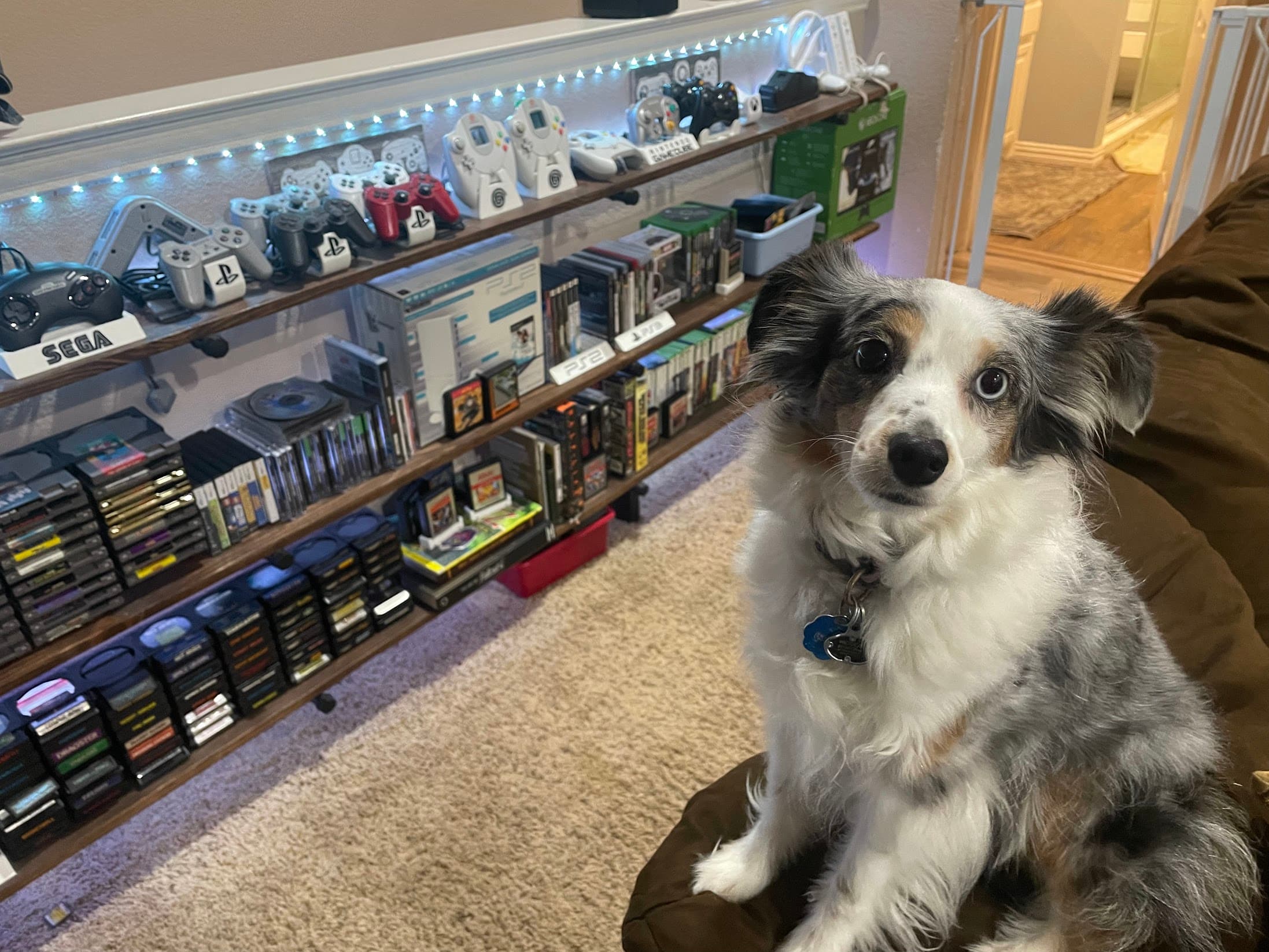
Figure 1: The Archive, currently under the strict supervision of Whisky, my Chief Morale Officer.
02 // The Archive: A Timeline of Architecture
The goal is a working library of gaming history. Almost all consoles are functional original hardware, maintained to play as intended on their native displays.
- The 8-Bit Era & Before (Logic Limits)// Atari 2600, ColecoVision, NES, Sega Master System
The era of pure assembly efficiency, where every CPU cycle and byte of memory was accounted for manually.
- The 16-Bit Era (The Sprite Wars)// Super Nintendo, Sega Genesis
The golden age of 2D architecture and custom sound chips. A masterclass in parallax scrolling and hardware-accelerated creative tricks.
- The Polygon Revolution (3D & Optical Media)// PlayStation 1, N64, Sega Saturn
The difficult transition from sprites to polygons. This era marks the introduction of complex 3D geometry and the shift from ROM cartridges to high-capacity optical storage.
- The Modern Era (High Fidelity)// GameCube, Wii/Wii U, PS2-PS4, Xbox (Gen 1 - One)
The convergence of console and PC architecture, introducing networking, hard drives, and high-definition rendering pipelines.
- Portable Compute (Handhelds)// Game Boy Family, Sega Game Gear, Nintendo DS/3DS
A separate study in power efficiency and screen technology, from the monochromatic DMG to the dual-screen innovations of the DS.
03 // The Workbench: Diagnostics & Repair
Entropy is the enemy of vintage electronics. Managing a collection of this size requires a rigorous approach to lifecycle management, and has burdened me with a wealth of incredibly specific knowledge.
Diagnostics
It involves identifying known failure points, such as the infamous capacitor plague that destroys Sega Game Gears or the supply chain dead-ends created by the GameCube’s proprietary mini-DVD optical drives.
Restoration
Performing component-level repairs personally or managing specialized vendors for complex board-level work to circumvent these hardware limitations.
// THE REALITY
I admit, knowing the precise chemical half-life of a 1991 capacitor isn't always useful in daily life. And truthfully, I currently spend about 70% of my time fixing these machines and only 30% actually playing them. But keeping the history alive is half the fun.